Quick Answer
Airport peak hours require active flight tracking, proactive driver positioning before the rush starts, and fast replacement protocols for last-minute changes, all managed inside LimoAnywhere.
Airport transfers are the bread and butter of most US limo companies. They are also the service type where dispatch errors hurt the most and happen the most often. Early mornings, late nights and travel rush periods create concentrated windows of high activity where multiple pickups are running simultaneously, flights are changing status constantly, and drivers are working back-to-back with almost no margin for coordination delays.
Why airport peak hours are different from everything else
A corporate dinner booking is a single vehicle, single trip, predictable timing. An airport peak period — Monday morning between 5am and 9am, Sunday evening arrivals, holiday travel windows — can mean eight to twelve simultaneous pickups, all with flight-dependent timing. A dispatcher handling this manually without proper LimoAnywhere flight tracking integration is behind before the first flight lands.
The role of flight tracking during peak hours
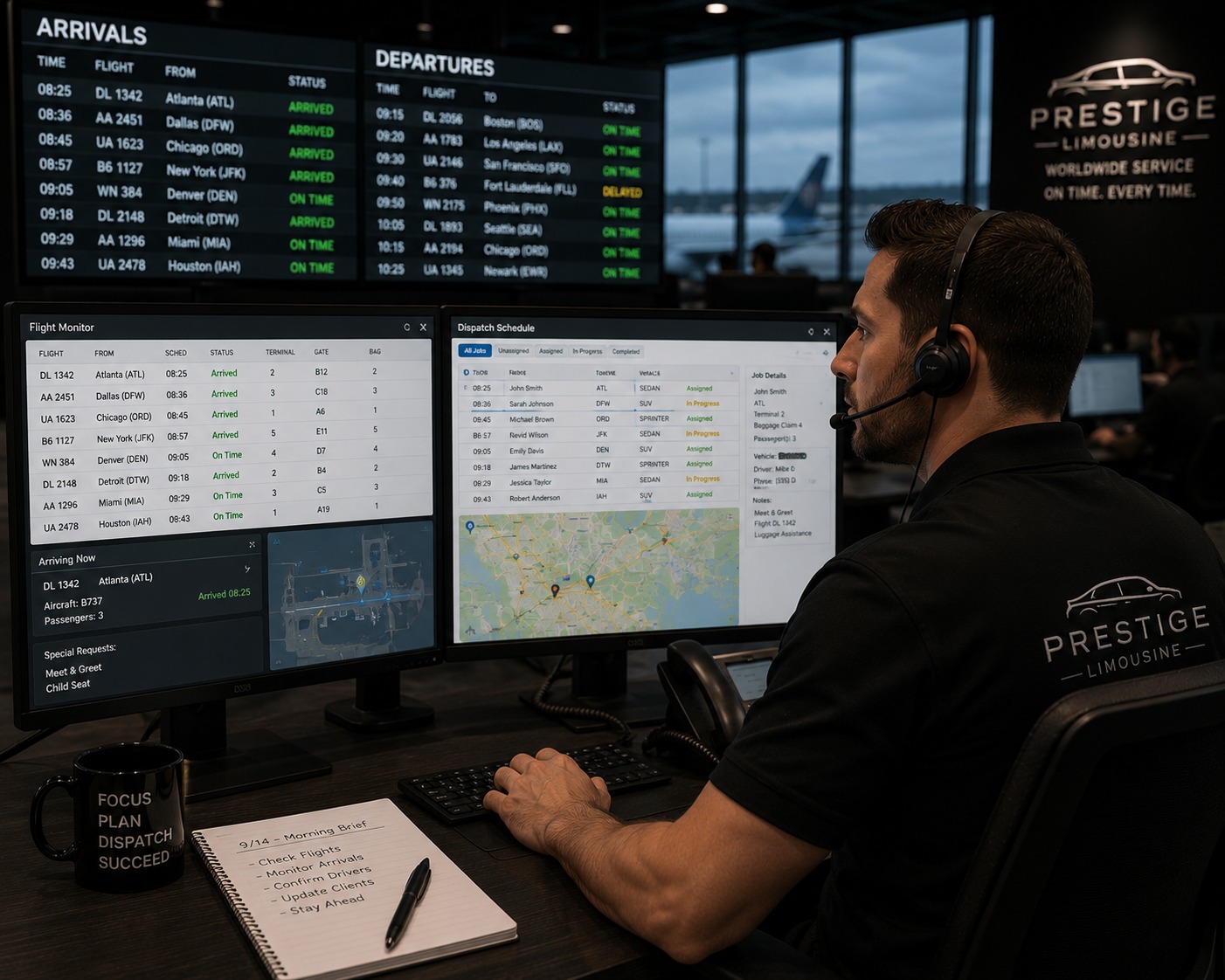
LimoAnywhere’s flight tracking integration is the operational foundation of airport dispatch during busy periods. During peak hours, a dispatcher monitoring flight tracking in LimoAnywhere is managing a live picture of every incoming trip. This is why airport limo dispatch is a specific skill, not just general dispatch applied to airport bookings.
Driver positioning before the rush
The limo companies that handle airport peak hours most cleanly are the ones who position drivers before the rush starts, not when it is already underway. A dispatcher reviewing the first two hours of airport pickups at the start of the shift, confirming driver positions, and checking flight statuses proactively — that preparation is what separates a smooth operation from one that is constantly reacting.
Handling the inevitable last-minute changes
A driver who cannot make a pickup due to a vehicle issue during a busy Monday morning window is a genuine crisis if there is no protocol. With a dispatcher who knows the fleet, has visibility into driver availability in LimoAnywhere, and can make a reassignment decision in under three minutes — it is a managed situation that the client may never even notice..
Communication with passengers during peak hours
Passengers arriving at a busy airport are not relaxed. A dispatcher handling peak hour airport arrivals should be sending proactive confirmations — driver name, vehicle description, exact pickup location — before passengers land, not after they have already exited and started calling to ask where their car is.
What this looks like with a trained dispatcher
A trained limo dispatcher managing your airport peak hours is monitoring flight statuses, positioning drivers proactively, sending passenger confirmations before landings, and handling any real-time changes without involving you. For limo companies doing significant airport volume,
24/7 dispatch coverage is the only structure that covers every peak window without gaps.
See our airport limo dispatch service →
Get a free consultation →
Q: Why are airport peak hours hard to manage in limo dispatch?
A: Multiple simultaneous pickups, constantly changing flight statuses, and tight driver timing all compound during peak periods, leaving little room for error.
Q: How does flight tracking help during peak hours?
A: It gives the dispatcher a live view of every incoming trip so pickup times and driver positions can be adjusted before a problem develops.
Q: What is driver positioning in airport dispatch?
A: Proactively placing drivers near upcoming pickups before the peak rush begins, rather than reacting once flights start landing.
Q: How fast should a dispatcher communicate flight changes to passengers?
A: Confirmations should go out before the passenger lands, not after they exit and start calling to ask where their driver is.